

If you’ve never collected Rolex Bubblebacks before, you should probably forget nearly everything you know about vintage watches. At least, that’s what it feels like you should do when you start wading into the space. Things like reference numbers are much less valuable to remember than movements, case designs, printing details, and a general ability to just remember everything you’ve seen to get a sense of feel for what is right and what isn’t. And trust me, a lot isn’t. You could spend decades looking at these watches, but “Bubble Back” by Masahiro Endo, the owner of vintage retailer Private Eyes in Tokyo, is a great reference to jump-start your understanding of an iconic (and currently underappreciated) model.
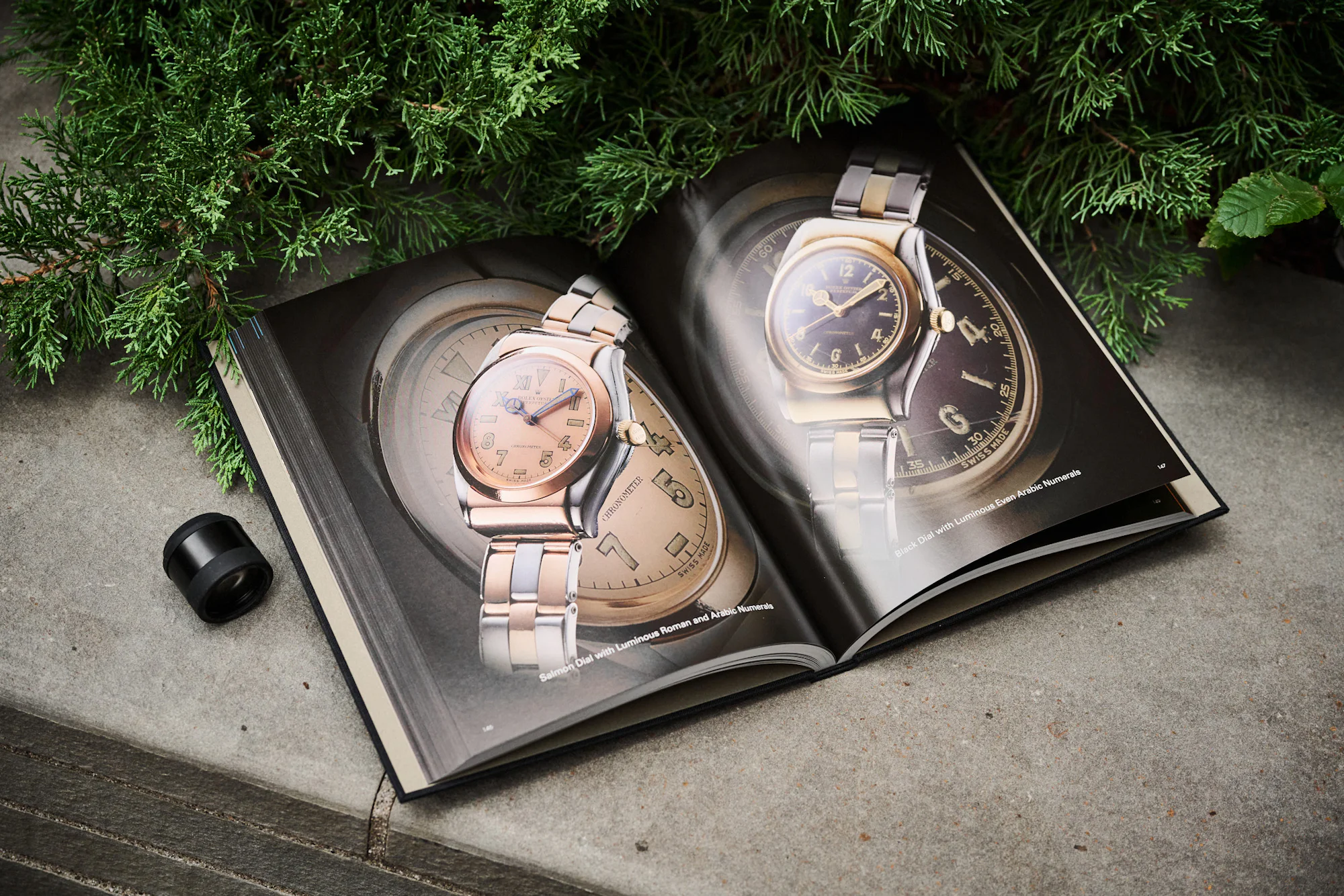
I mentioned this in last week’s review of John Nagayama’s “96,” but the only watch I’d be more afraid to deep-dive into than the Patek ref. 96 is the Rolex “Bubbleback.” It’s not even an official model, but a nickname for Rolex watches made from 1933 to the mid-1950s with a domed, “bubble-like” caseback. So when you open Endo-san’s book, you’ll probably immediately be struck by the fact that none of the examples (except the later ref. 6062 and ref. 8171) have reference numbers. According to collectors, that’s not the most useful thing for understanding the Bubbleback. Basically, every other detail matters more.

We’ve previously published a story about the bubbleback with a lot of thoughts and tips for understanding these models, courtesy of Ken Jacobs and Justin Gruenberg. This would be a good primer before you jump into Endo-san’s book, as after a few words about his love and history of the watch, he jumps right into the examples. In the book, he has about 20 sections, plus a brief addendum that shows different dial styles/printing, case types, and a few other things. There’s a lot of information in there, but it helps to know what you’re looking for.
Japanese collectors have a deep history with bubblebacks, just like they do with the Patek ref. 96. They are both similarly sized for smaller wrists, with bubblebacks starting around 30.5mm (up to 32mm in the early days) and only getting to 34mm or 36mm in later years. While collectors like Jason Singer cut their teeth on bubblebacks, the variety of dials and case styles makes them a minefield. The Japanese nicknamed them “Daruma,” for the hollow, round Japanese dolls.

Rolex started with a small 8 ¾ ligne movement from 1933 to 1935, then moved to the “NA” automatic caliber 9 ¾ ligne movement through the end of the bubbleback line. Endo-san outlines the changes to that caliber in quick detail, between sharing some outstanding pre-NA models and getting into the weeds on the rest. Different case constructions, shapes, and materials make up the bulk of the breakdown for the rest of the book, all with some outstanding examples.
That makes sense, as Endo-san has sourced a lot of these watches for clients who contributed watches for photography in the book. Others come from prominent dealers, too. I’ve never met him, but I know some of the dealers who work with him to find watches, and everyone speaks highly of his taste. He also makes (in my opinion) the best vintage-style Gay Freres bracelet recreations on the market.

“Bubble Back” is in Japanese, translated into English by PaddleWaves. It’s a large, nicely bound book with a linen shell outer cover, and one that goes beyond just the pretty pictures of outstanding watches. But yes, the watches are outstanding. And that’s the final point. If you’re going to learn bubblebacks, the only way to really know them is to look at them closely. Justin Gruenberg called these watches “modular.” People used to be much more okay with dials and cases being swapped around, and a large majority (most, I’d say) of dials have been retouched at some point. Studying the watches in this book will go a long way for people like me who haven’t had a ton of opportunity to get hands-on with great examples.
The book “Bubble Back” is available on request directly from Private Eyes in Japan, and is limited to 600 copies. The retail price, as of March 2026, was ¥60,000, or approximately $375, not including shipping.