


Description
Key Features of a 1960s Longines 18 kt Yellow Gold Watch:
- 18 kt Yellow Gold Case:
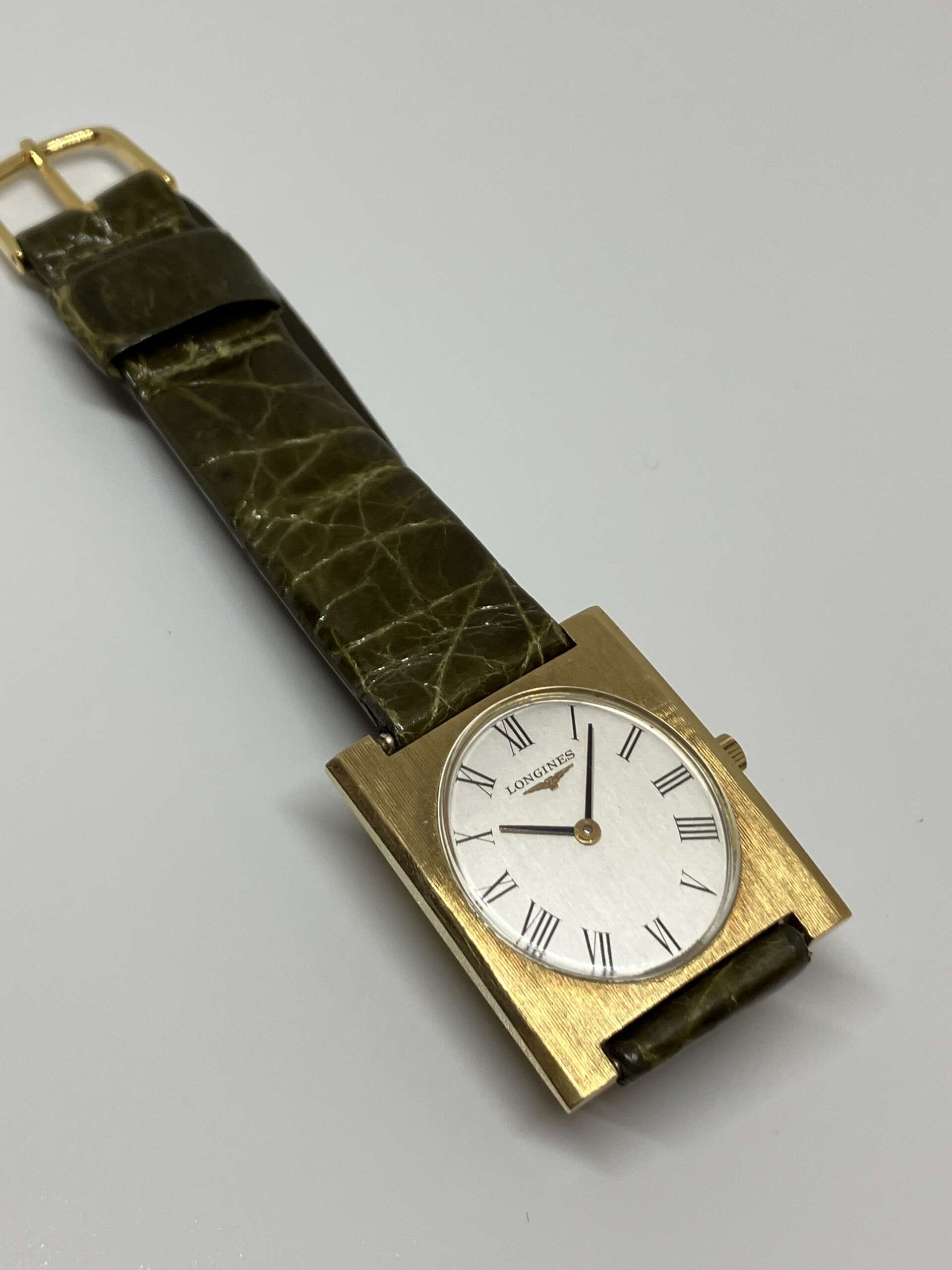
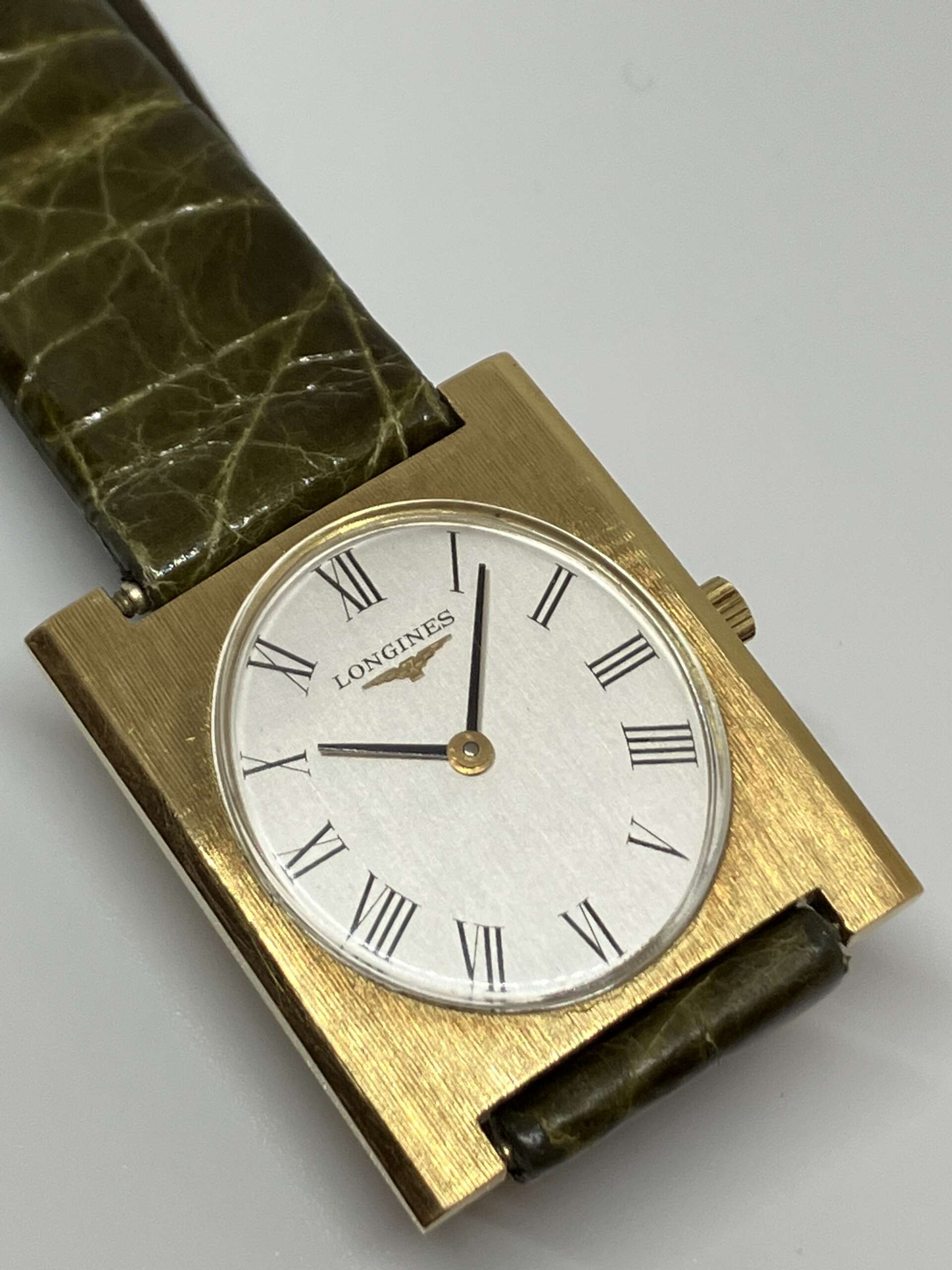
- The 18 karat yellow gold case is a hallmark of luxury, offering both aesthetic beauty and tangible value. Watches crafted in 18 kt gold have a higher purity (75% gold content), giving them a rich, warm yellow tone that speaks to their luxurious nature.
- Gold watches from the 1960s typically had slim, elegant cases, designed to reflect the minimalist fashion of the time. The case sizes were often 34mm to 36mm in diameter, a standard size for dress watches during that period.
- The gold case is often polished to a high shine, further enhancing the luxurious feel and making it perfect for formal occasions.
- Dial and Aesthetics:
- The dial of a 1960s Longines is usually simple and refined, in keeping with the minimalist trends of the era. Most dials were silver, white, or champagne in color, offering a clean, elegant backdrop for the hands and markers.
- Gold baton hour markers or applied Roman numerals were common, matching the gold of the case. These markers are slim and understated, in line with the dress watch aesthetic.
- The hands are typically gold and dauphine-shaped (sharp, faceted) or stick-shaped, providing a subtle but classy contrast against the dial.
- Many models from this era feature a subtle date window, often located at 3 o’clock, but some models opt for a completely clean and unadorned dial, highlighting the time-only function.
- Movement:
- Longines is known for its high-quality in-house movements, and a 1960s Longines watch in 18 kt gold is likely to be powered by one of their manual-wind mechanical movements or an automatic caliber.
- Common movements from this era include the Longines Caliber 30L or Caliber 19A for manual winders, and automatic movements such as the Caliber 341. These movements were designed for precision and durability, reflecting Longines’ long-standing commitment to Swiss craftsmanship.
- The manual-wind movements require daily winding, which adds a tactile and traditional aspect to owning such a timepiece, while the automatic movements wind themselves through the motion of the wrist, providing convenience and innovation for the time.
- Crystal:
- The watch would typically feature an acrylic crystal or plexiglass in the 1960s, which was common during that time. While not as scratch-resistant as modern sapphire crystal, acrylic is more resistant to shattering and can be polished to remove minor scratches.
- Some restored or well-preserved vintage models might have replaced the original acrylic with a modern sapphire crystal, but purists often prefer the original material for its vintage authenticity.
- Case Back:
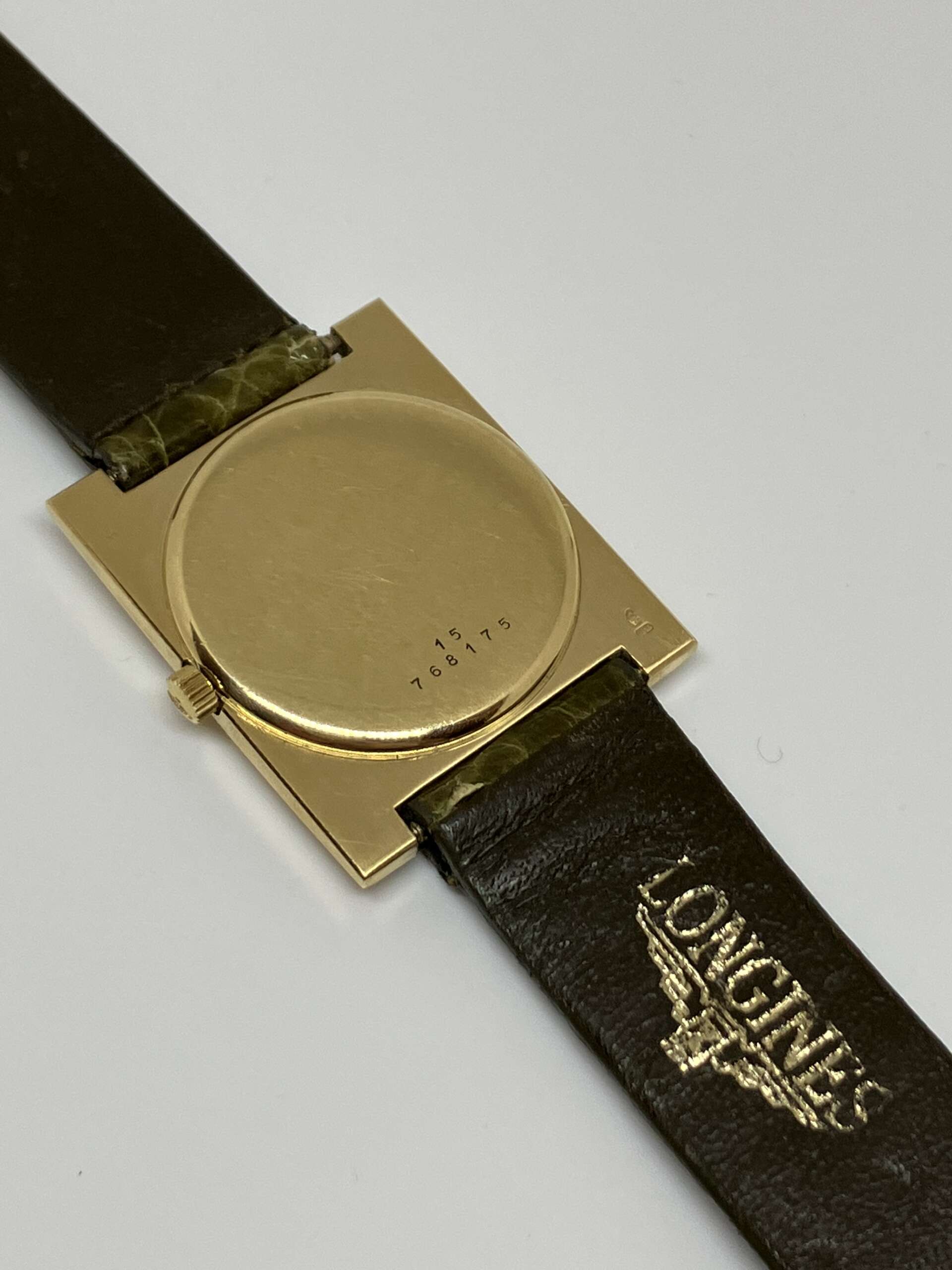
- The case back of a 1960s Longines watch is often solid gold, without a display window, reflecting the elegance and simplicity of the era.
- The back may be engraved with the Longines logo, and sometimes include specific serial numbers or markings denoting the watch’s authenticity and 18 kt gold content. These engravings are subtle but can offer clues about the watch’s provenance and history.
- Strap and Wearability:
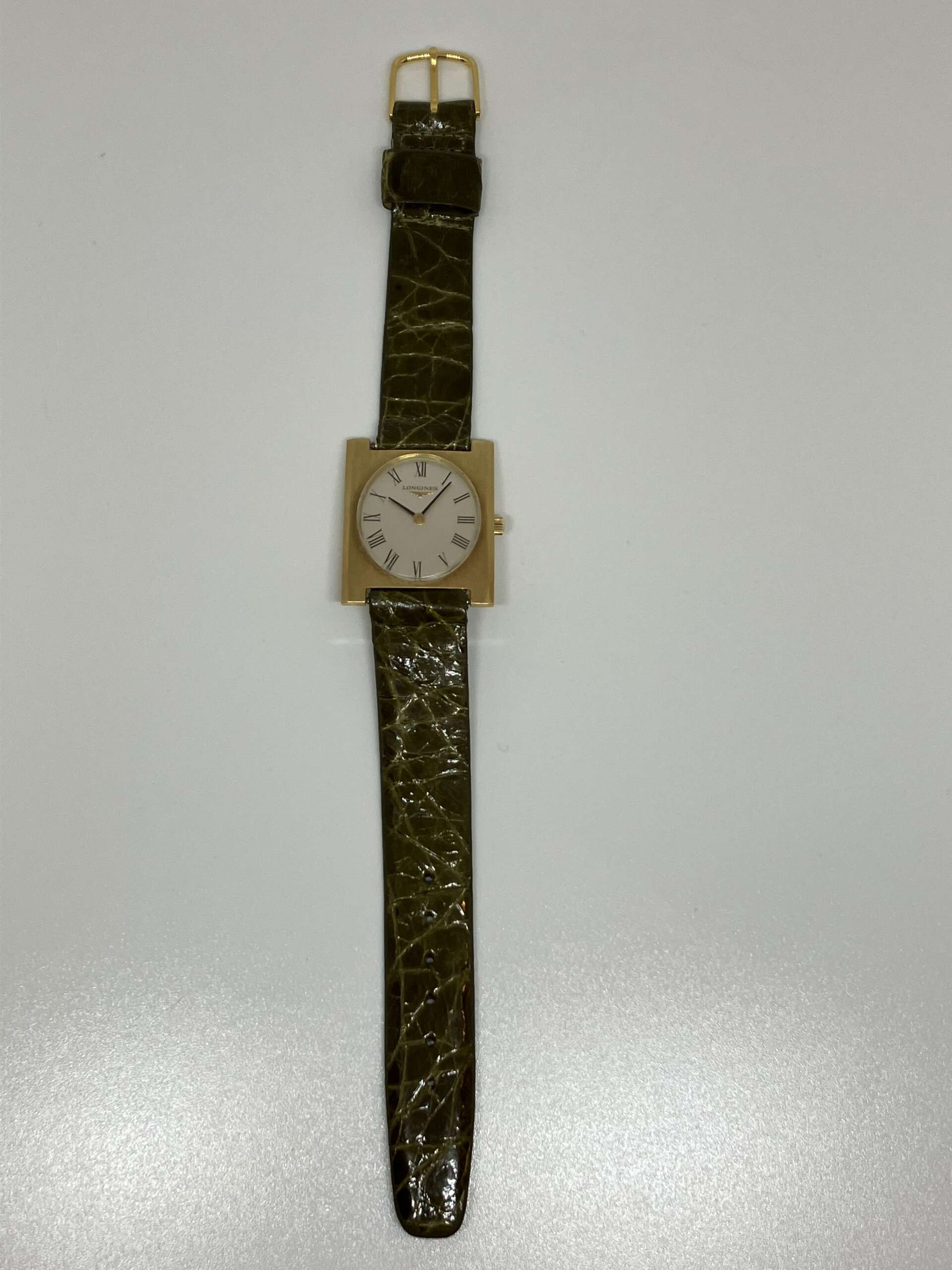
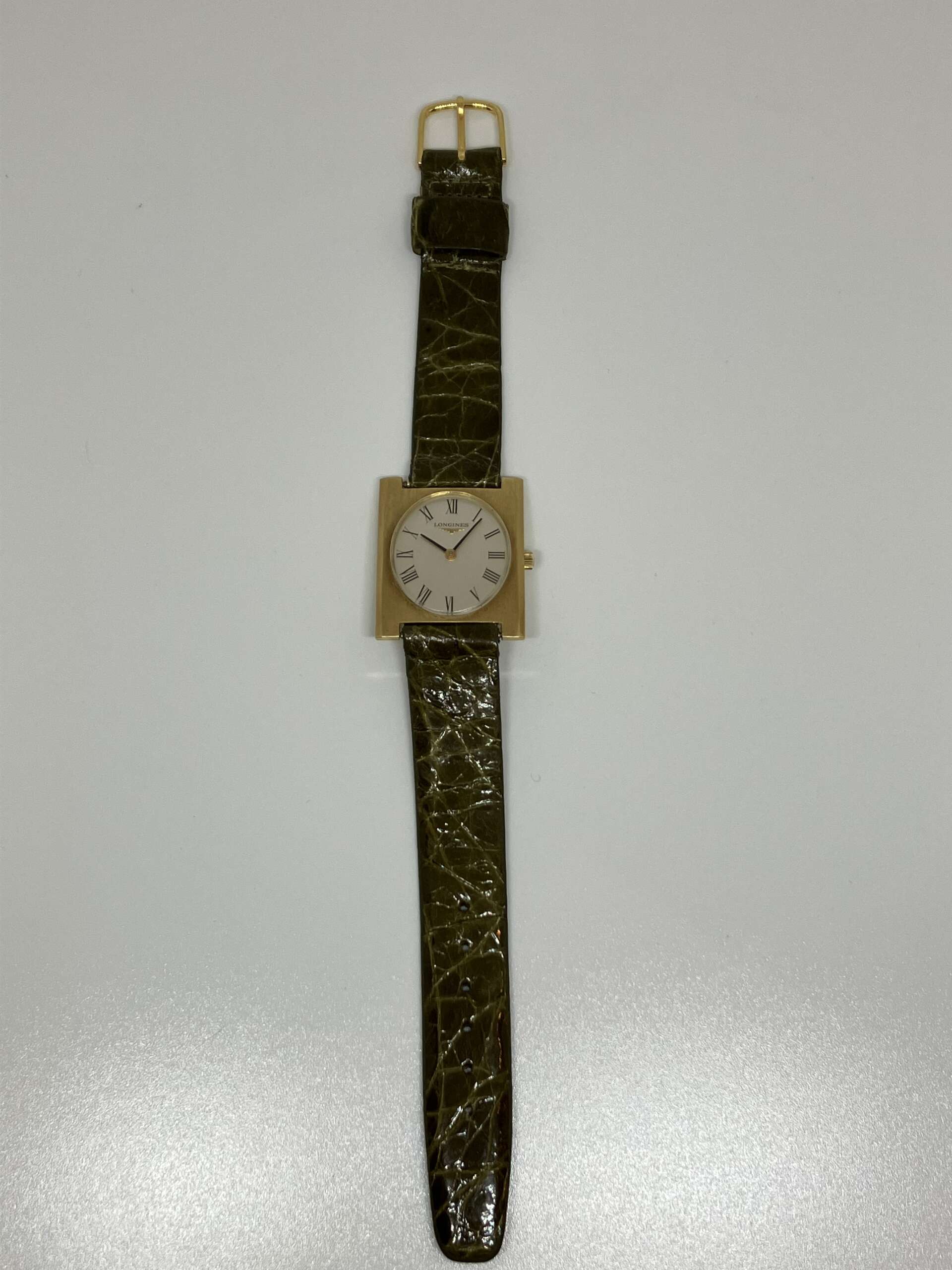
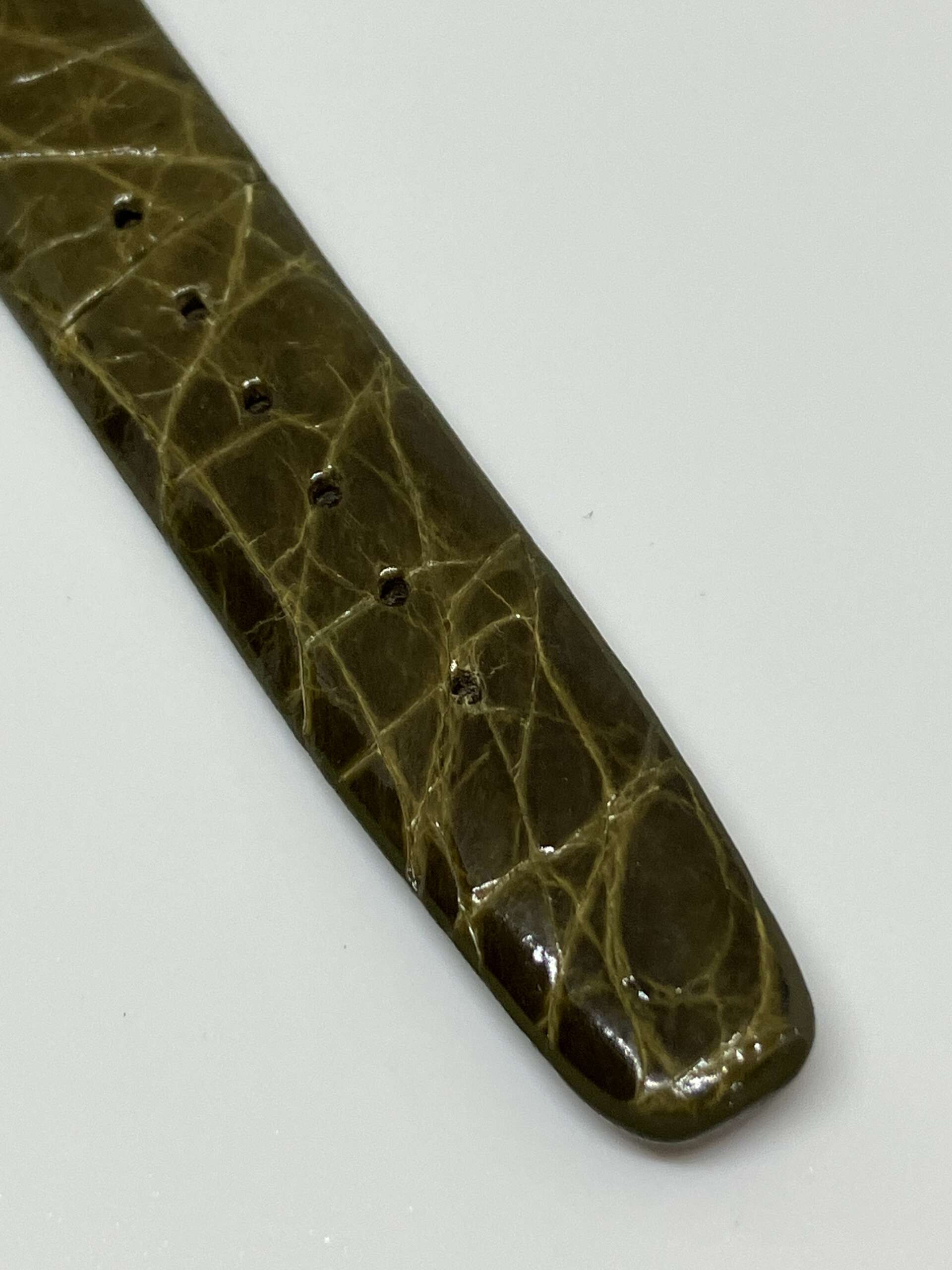
- These watches typically came with a leather strap (in black or brown), which complements the warmth of the yellow gold case. Leather straps were the standard for dress watches in this period, offering both comfort and elegance.
- The watch may also have come with an 18 kt gold bracelet, though this is less common and would increase the value and weight of the piece significantly. The combination of a gold case with a leather strap remains a classic and refined pairing, perfect for formal wear.
- Despite its luxurious materials, the slim profile and refined design of these watches make them comfortable to wear for extended periods.
- Historical and Collectible Value:
- Vintage Longines watches from the 1960s have gained significant appeal among collectors due to their timeless design and the brand’s reputation for precision and craftsmanship.
- The 18 kt yellow gold models are particularly valuable because of the gold content and their relative rarity compared to stainless steel models.
- Longines has a storied history, and owning a 1960s model allows collectors to experience a piece of this legacy firsthand. These watches have held their value well and are often sought after at auctions and by vintage watch enthusiasts.
Summary:
A 1960s Longines 18 kt Yellow Gold Watch is a perfect blend of Swiss watchmaking heritage and luxurious design. With its manual or automatic movement, refined dial, and the beauty of its 18 kt gold case, it’s an ideal dress watch that exudes sophistication. The vintage appeal and the craftsmanship from one of the oldest Swiss watchmakers make this a collectible and timeless piece that continues to captivate enthusiasts and collectors alike. Whether you’re drawn to its aesthetic, history, or investment potential, a 1960s Longines in 18 kt gold is a quintessential example of mid-century luxury watchmaking.


